 Image 1 of 1
BA pandemic project that didn’t involve a job change (so many record stores and online retailers popped up, demon-style, since 2020 [sigh]). The labor for this one was spread across states (New York, Maine, Copeland pod-style!). Like his musical output over the last 30 years (see Black Dice, under his own name, collaborations with others) Eric Copeland totally committed to this project.
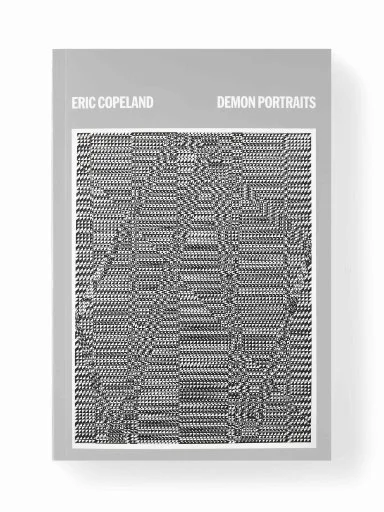
And as his method spells out, there are links to be made between his musical approach and this new arm of his visual art. Demon Portraits takes its form from four copies of Aldous Huxley’s Brave New World. Using these four copies, Copeland cut out individual letters and groups of letters and pasted them over the existing narrative, incorporating select letters into every word and using #whiteout to obscure others — a Moby Dick-like pursuit that took more than 11,000 hours of labor well over three years of work. Everyone’s sense of time and place changed during the pandemic, but nothing on this scale.
Copeland describes his process, this way: “Every word required many minutes (at least) of work: to analyze what letters Huxley had provided, decide the word(s) that worked within my confines, find each letter, then cut and paste it into form.” Tom Phillips’s A Humument: A Treated Victorian Novel (1970-2016) involved a similar method, but to very different ends. Copeland describes how Huxley’s writing informed, guided, and also restricted his word choices, forcing an improvised (free?) and hyper-restricted relation between his “demon” text and Huxley’s OG: “I feel this textual tension and its resolution is the vague ‘narrative’ of Demon Portraits. I could never rely on being able to write what I wanted. I had to go with it. And it got weird. But it all went somewhere.”
BA pandemic project that didn’t involve a job change (so many record stores and online retailers popped up, demon-style, since 2020 [sigh]). The labor for this one was spread across states (New York, Maine, Copeland pod-style!). Like his musical output over the last 30 years (see Black Dice, under his own name, collaborations with others) Eric Copeland totally committed to this project.
And as his method spells out, there are links to be made between his musical approach and this new arm of his visual art. Demon Portraits takes its form from four copies of Aldous Huxley’s Brave New World. Using these four copies, Copeland cut out individual letters and groups of letters and pasted them over the existing narrative, incorporating select letters into every word and using #whiteout to obscure others — a Moby Dick-like pursuit that took more than 11,000 hours of labor well over three years of work. Everyone’s sense of time and place changed during the pandemic, but nothing on this scale.
Copeland describes his process, this way: “Every word required many minutes (at least) of work: to analyze what letters Huxley had provided, decide the word(s) that worked within my confines, find each letter, then cut and paste it into form.” Tom Phillips’s A Humument: A Treated Victorian Novel (1970-2016) involved a similar method, but to very different ends. Copeland describes how Huxley’s writing informed, guided, and also restricted his word choices, forcing an improvised (free?) and hyper-restricted relation between his “demon” text and Huxley’s OG: “I feel this textual tension and its resolution is the vague ‘narrative’ of Demon Portraits. I could never rely on being able to write what I wanted. I had to go with it. And it got weird. But it all went somewhere.”